
Marble in a Louisiana Kitchen: Romantic Idea or Practical Nightmare?
There’s a particular quality to marble that no other stone surface quite captures. The match of sweeping veining set against a luminous depth invokes the finery of the Renaissance and transforms any place into something approaching art. Countless renovators and designers find themselves entranced, admiring marble from afar in showrooms and in restored estates of old cities. Naturally, the thought follows: marble belongs in my home.
Before you commission that exquisite slab, however, there are certain realities about marble countertops pros and cons that deserve your attention, particularly if you’re asking “is marble good for kitchens” in the context of a South Louisiana home. The Gulf Coast climate, for all its charms, presents unique challenges to natural stone, and the difference between marble that ages gracefully and marble that disappoints often comes down to understanding what the material genuinely requires.
We’ve installed marble in some of the Baton Rouge area’s most distinguished homes, luxury chef kitchens, restored plantations, contemporary estates. So, we’ve observed firsthand both its triumphs and its limitations. The distinction isn’t about the workability of the stone itself, but an alignment between material and lifestyle.
Why Discerning Homeowners Choose Marble
Step into any properly appointed kitchen in Europe, and you’ll find marble. There’s so many reasons it has endured for centuries.
Artistry and Unique Natural Beauty
Each slab represents millions of years of geological artistry. The veining, the subtle shifts in color, the organic patterns – this beauty is nature’s singular achievement. No two pieces are identical, which means that any room where you install marble, whether it’s your kitchen or lobby or guest bath, is infused with an historic character that cannot be replicated or mass-produced.

Functional Benefits for Bakers and Entertainers
If you’re someone who bakes seriously or considers entertainment an art of hospitality, marble offers a genuine functional advantage that professional pâtissiers have relied upon for generations. According to the Culinary Institute of America, the surface remains naturally cool, typically 8-10 degrees below ambient temperature, making it ideal for working with delicate pastries, tempering chocolate, or preparing elaborate charcuterie presentations. On a humid Louisiana evening, that cool touch becomes another tool in your culinary arsenal.
Heritage and Property Value
Beyond function, there’s the matter of legacy. Marble carries an undeniable gravitas. While granite and quartz have their place, marble signals a higher level of commitment to materials that have stood for centuries. As noted by Architectural Digest, it works seamlessly in both classical and contemporary interiors. When maintained properly, it can genuinely enhance your property’s value and appeal to the right buyer.
Consider What Marble Stewardship Requires
Marble is not a material for the indifferent or the casual. It requires understanding of certain fundamental characteristics.
Etching is inherent to the material.
Marble is calcium carbonate, which reacts with acidic substances. Not just harsh chemicals, but the very ingredients that make a kitchen functional: lemon juice, wine, vinegar, tomato-based preparations. These create dull spots or rings through chemical reaction, not surface staining. If your cooking style involves abundant citrus, regular wine service, or acidic sauces prepared directly on the counter, you will see etching. It’s the nature of the stone.
Porosity requires consistent attention.
Even with proper sealing, marble absorbs liquids more readily than denser stones. Red wine, espresso, olive oil, or anything with color or oil content can penetrate if not addressed immediately. According to the Marble Institute of America, the seal provides protection, certainly, but it requires renewal every six to twelve months. In Louisiana’s climate, annual maintenance is the bare minimum; biannual is prudent.
The surface is softer than one might expect.
Marble registers between 3-5 on the Mohs hardness scale, compared to granite’s 6-7, making it more susceptible to scratching. Knives, metal serving pieces, and heavy cookware can all leave marks. Cutting boards are never really optional with other stones either, but with marble, they’re essential. Even the act of sliding a cast iron across the surface requires care.
Structural integrity depends on proper installation.
While uncommon, marble can crack under significant impact or if the substrate settles. This is why working with experienced fabricators matters considerably. With our founder’s background in construction, our team has an eye for detail and a deep understanding of installation processes that will protect your final vision.
Investment extends beyond acquisition.
According to HomeAdvisor, marble typically ranges from $40 to $150 per square foot installed before factoring in ongoing sealing and maintenance. Quality marble is an investment in every sense: initial outlay, ongoing care, and the time required to preserve it properly.
The Gulf Coast Consideration: Humidity’s Impacts on Marble
This is where regional knowledge becomes essential. For all its character and beauty, the Louisiana climate is not particularly forgiving to porous natural stone.
Our warm, humid environment intensifies marble’s inherent porosity. The constant atmospheric moisture means your counters are perpetually exposed to humidity, not merely when liquids are spilled. This accelerates the need for sealing. What might require annual attention in drier climates demands biannual sealing here as a matter of course. In historic Garden District homes or contemporary estates along the river, we’ve found that twice-yearly sealing is simply the cost of maintaining the material properly.
Humidity also creates conditions where mold and mildew can establish themselves on unsealed surfaces, especially in the microclimates around sinks and preparation areas. Vigilant cleaning protocols and consistent sealing mitigate this, but it requires attention.
There’s also the matter of how humidity interacts with existing wear. Etching that might appear subtle in February can become more pronounced by August as moisture affects the sealant layer. The stone shows its history more readily in our climate.
The compensation, if one can call it that, is thermal. Marble genuinely maintains a cooler surface temperature than engineered materials or darker granites throughout our long summers. In a kitchen that sees serious use from June through September, that coolness is a desirable, functional comfort.
At Stone Baton Rouge, we typically guide clients toward Calacatta or Carrara varieties for Gulf South installations, both tend to show wear somewhat more gracefully than darker marbles.
Visit Our Showroom
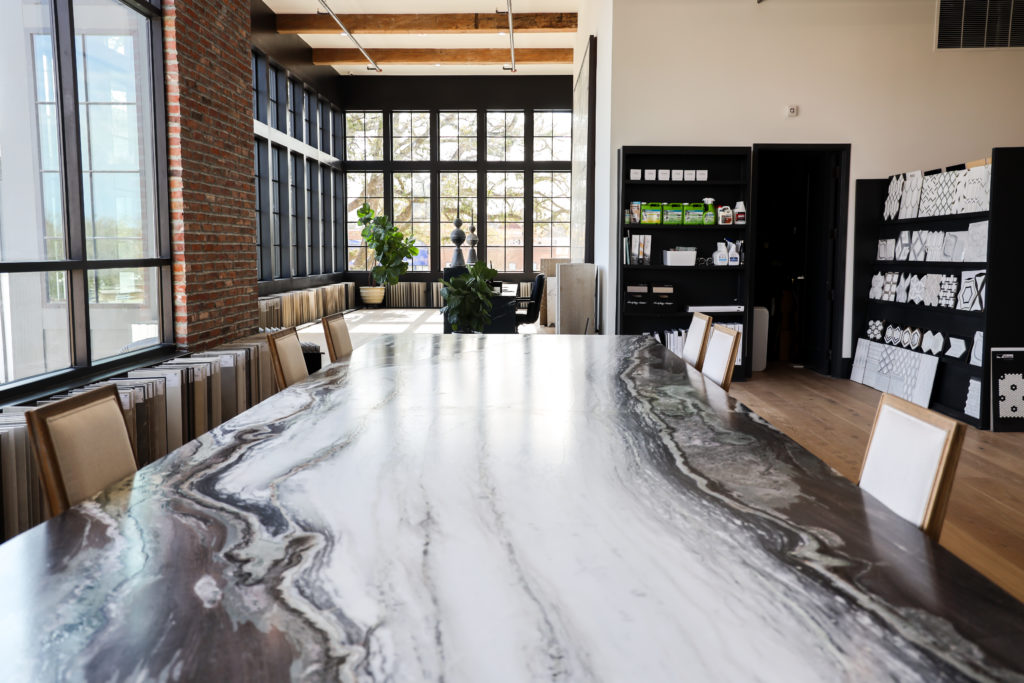
No written overview can substitute for direct observation and tactile assessment. Marble must be seen in person, compared alongside alternatives, and evaluated in the context of your specific requirements and aesthetic vision.
This is precisely what our showroom facilitates. At Stone Baton Rouge, we’ve worked with custom homes, renovations, and new construction throughout the Gulf South to understand how these materials perform in our particular climate and how they integrate with various architectural styles, from restored historic properties to contemporary designs.
We’re not here to direct you toward the most expensive slab in inventory. Our purpose is to guide you toward the surface that genuinely aligns with your cooking patterns, entertaining style, household dynamics, and maintenance expectations.
We welcome you to visit. Bring your questions, your Pinterest references, your concerns. We’ll provide straightforward counsel informed by years of local installations, and we’ll help you make a decision with complete clarity. The best countertop is the one that continues to serve you beautifully five years down the line, and that begins with proper selection from the outset.
Frequently Asked Questions
-
Is marble a suitable choice for kitchen countertops?
Marble can be an exceptionally beautiful and functional selection, provided one approaches it with appropriate expectations regarding stewardship. If your preference leans toward low-intervention materials, marble likely isn’t the optimal choice, but if you appreciate the aesthetic and are prepared to provide proper maintenance, it can serve beautifully for decades.
-
How frequently do marble countertops require sealing in Louisiana?
In warm, humid climates such as South Louisiana, marble requires sealing every six to twelve months. We strongly advocate for biannual sealing as standard practice rather than annual maintenance as minimum threshold.
-
Does marble stain easily?
Yes, marble’s porous nature means it absorbs liquids and can stain if not properly and consistently sealed. But, even with diligent sealing, immediate attention to spills is essential or you risk staining. This is the fundamental character of the material.
-
What is etching, and how does one prevent it?
Etching is a chemical reaction between marble’s calcium carbonate composition and acidic substances that manifests as dulled areas, rings, or lighter patches where the polish has been compromised. Complete prevention in an active kitchen is unrealistic, but mitigation involves addressing acidic spills immediately and avoiding acidic cleaning products entirely.
-
Is honed or polished marble preferable for kitchens?
Honed (matte) marble proves more forgiving in working kitchens because it conceals etching, minor scratches, and daily wear considerably better than polished surfaces, though it requires identical sealing protocols. Polished marble offers more dramatic visual impact and superior light reflection, which is striking in showroom settings, but in actuality of your home, it reveals every etch and mark in active use.
-
What alternatives offer similar aesthetic qualities with different performance characteristics?
Quartzite is natural stone that delivers marble-esque beauty with significantly greater hardness and lower porosity. It resists etching and staining more effectively while maintaining natural stone character. Premium quartz engineered surfaces can also replicate marble veining with virtually no maintenance requirement and no sealing protocol. Both represent viable alternatives for Louisiana kitchens where the aesthetic appeal of marble is desired, but the maintenance commitment is less aligned with our household realities.